Search “low-impact workouts for seniors” and you’ll get a lot of gentle stretching videos. That’s a piece of it, but it isn’t the whole picture — and it’s why people assume low-impact is a polite way of saying “not a real workout.” Low-impact describes what your joints are doing, not how hard you’re working. Those are two different things, and the difference is worth explaining.
What “low-impact” actually means
Low-impact just describes what your joints are doing, not how hard you’re working. High-impact means both feet leave the ground at the same time — think jumping jacks, running, box jumps. Low-impact means at least one foot stays on the ground, which takes the pounding off your knees, hips, and back.
That’s it. It has nothing to do with how much effort goes into the move.
How we scale strength and resistance work
In Active Fit 55+, strength and conditioning is built around resistance, not impact:
- Light dumbbells instead of explosive jumping
- Hand weights and bodyweight moves like sit-to-stands and modified push-ups
- Controlled tempo — moving with control instead of momentum
- Standing or seated intervals depending on what your body needs that day
A dumbbell curl, done for a full set with good form, works your muscles just as hard as a lot of higher-impact moves — without the jarring landing. Same with a controlled sit-to-stand versus a jump squat. The muscle doesn’t know the difference. Your knees definitely do.
The interval piece
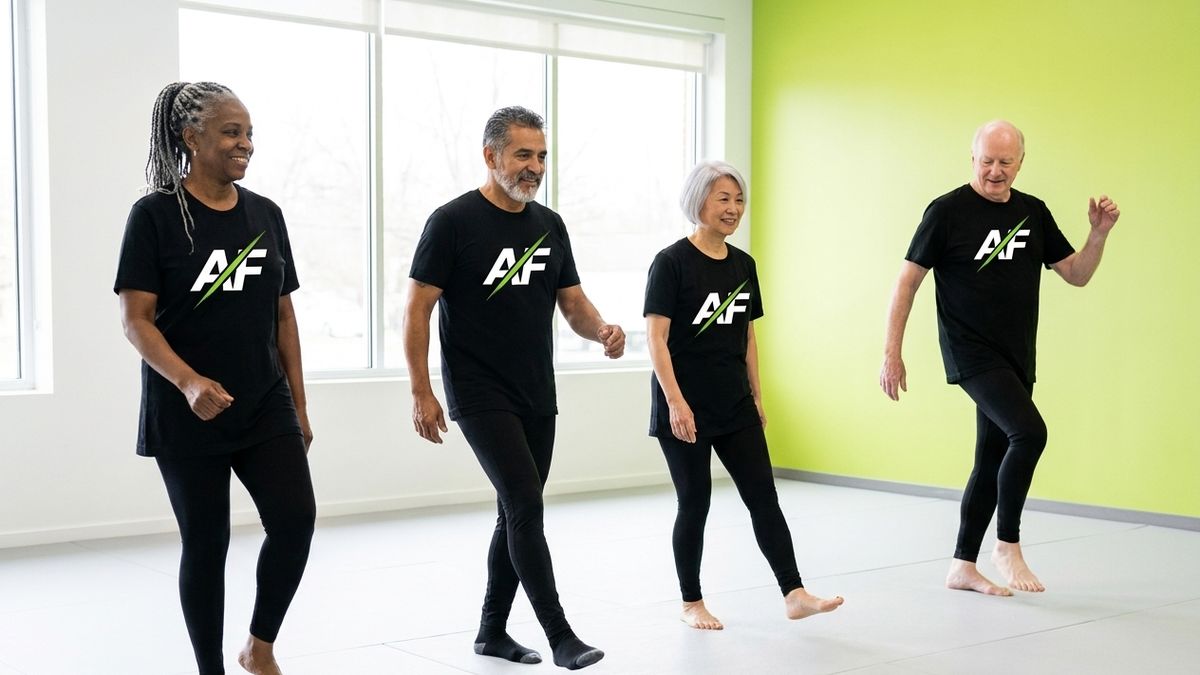
Our low-impact interval training follows the same idea: short bursts of more effort, followed by rest, using movements that keep you grounded. Think fast marching, quick step patterns, or light dumbbell work at a quicker pace — followed by a recovery period. It’s the “work hard, then rest” structure that makes intervals effective, minus the pounding.
Effort still shows up
Ask anyone who’s finished a full Active Fit 55+ session whether “low-impact” meant “easy,” and you’ll get a laugh. Members leave breathing a little harder, having worked muscles they’d forgotten about, and often say the next day comes with a good kind of soreness. That’s real effort — just delivered in a way that respects joints that have been around for 55-plus years.
We won’t claim this training reverses joint issues or treats arthritis or any other condition — we’re not doctors, and that’s not our place. What we can say is that many members tell us daily movement feels a little easier and less stiff once class becomes a habit.
Check with your doctor first
As with any new exercise program, check with your physician before starting, especially if you have joint, heart, or other health concerns. Our coaches are there to guide safe movement, not to provide medical care.
Come feel the difference
The only way to really understand low-impact-but-not-low-effort is to try it. Book a Free Intro Class and put it to the test yourself. Call 951.337.3781 or come by Flow Academy BJJ at 3600 Central Ave, Ste 3, Riverside, CA.